News 5 min read By Mason Emerson
Trump’s Intervention in FIFA Red-Card Decision Sparks Media Backlash
President Donald Trump’s call to FIFA President Gianni Infantino to review a red card against U.S. World Cup star Folarin Balogun has drawn sharp criticism from journalists and pundits, who accuse the administration of political interference in sports. The reversal of Balogun’s suspension has reignited debates over fairness and influence in international soccer.
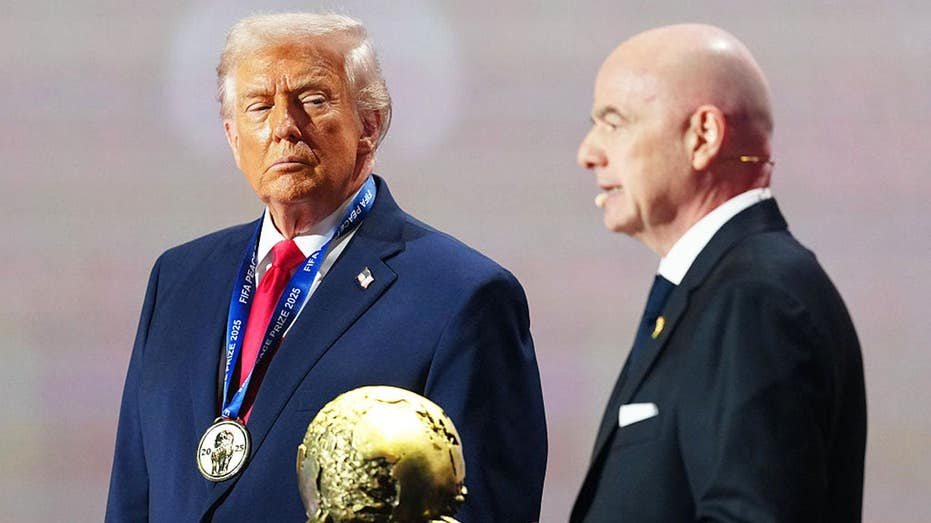
President Donald Trump’s direct appeal to FIFA regarding a controversial red card issued to U.S. World Cup star Folarin Balogun has ignited a firestorm of criticism from media figures, political commentators, and pundits who accuse the administration of exerting undue influence over international soccer. Balogun, a key player for the United States men’s national team, received a red card during last week’s victory over Bosnia and Herzegovina after stepping on an opponent’s ankle during a play. The card, which came after a video assistant referee review, mandated that Balogun miss the remainder of that match and the subsequent game against Belgium, a critical World Cup showdown.
According to a source who spoke with Fox News, Trump called FIFA President Gianni Infantino to request a review of the play. The reversal was announced on Sunday, nullifying the one-game suspension and allowing Balogun to play in Monday’s match. Trump’s Commerce Secretary Howard Lutnick and White House task force leader Andrew Giuliani assembled a team of lawyers outside the White House to challenge the use of slow-motion replay in issuing the red card, as reported by OutKick founder and Fox News contributor Clay Travis. Infantino issued a statement Monday acknowledging the conversation with Trump but emphasizing that FIFA’s judicial bodies operate independently and autonomously, applying the disciplinary code based on regulations and specific facts.
The media reaction was swift and largely negative. On MSNBC’s «Morning Joe,» co-host Jon Lemire expressed concern about potential backlash, saying, «This certainly helps the U.S. on the field, but the karma is bad. The karma is very bad… This U.S. run so far has been magical. This decision may help us extend it, but suddenly the feeling is a little bit off.» Washington Post columnist Kate Andrews, speaking on MS NOW, argued that Trump misunderstands soccer’s nature, stating, «I think the president has misunderstood the beautiful game, part of it is that you don’t always get the call you want. There’s real disappointment. There’s the hope that kills you. This is part of the beauty of soccer. And the point is that you have to triumph over what are often perceived to be unfair calls.»
Former MSNBC host Keith Olbermann responded on social media with a terse accusation: «So the World Cup is fixed? Got it.» Journalist Mehdi Hasan sarcastically captioned a report about Trump’s call to Infantino with, «Totally normal and not corrupt or dodgy or biased at all.» New York Times columnist Nicholas Kristof warned of international perception, writing, «This will appear to the world as favoritism and as FIFA bowing to political influence. If the U.S. wins, I fear that much of the world will see it as a win with an asterisk and as Trump’s America making its own rules even in the sports world.» ABC News contributor Donna Brazile called it a «terrible decision to involve the White House into this. Just horrible.»
Some critics focused on Balogun’s status as a birthright citizen, noting the irony of Trump intervening on behalf of a player who qualifies for the U.S. team through birthright citizenship, a policy Trump has sought to challenge. Journalist Julia Loffe wrote, «The irony of Trump calling FIFA to overturn a red card for Balogun because he knows the U.S. can’t win without Balogun, who only qualifies for the U.S. team because of birthright citizenship, which Trump just tried to overturn.» Radio host Courtney Theriault added, «Donald Trump calling FIFA to overturn the suspension of noted birthright citizen Folarin Balogun the same week SCOTUS rules against him on eliminating birthright citizenship is peak Trump.»
Trump himself addressed the controversy on Monday, telling reporters he did not instruct FIFA on what to do and maintained that the red card was not the proper call. «I didn’t tell him what to do. I don’t believe he made the decision. I think it was a committee that made the decision, and they made the right decision because, No. 1, it wasn’t a foul, and you want to see a game with your best players,» he said. A win on Monday would send the U.S. to the World Cup quarterfinals for the first time since 2002, adding high stakes to the match and the surrounding debate over the role of political influence in sports.