News 5 min read By Mason Emerson
Trump Threatens to Expand Strikes on Iran, Warns Power Plants and Bridges Are Next
President Donald Trump has threatened to expand U.S. military strikes on Iran, warning that power plants and bridges will be targeted next week unless Tehran returns to negotiations. He expressed frustration over Iran's history of breaking promises and said the U.S. will continue hitting the country 'very hard' until he determines it is 'enough.'
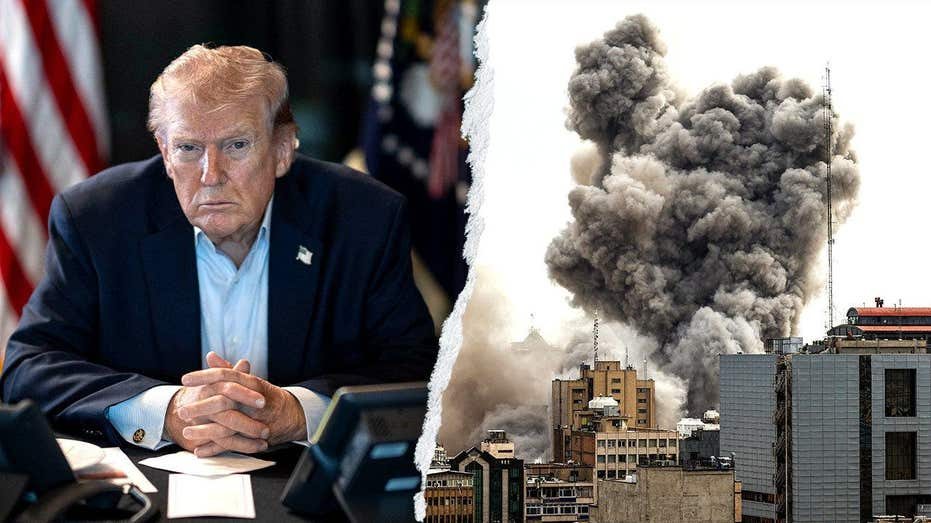
President Donald Trump has escalated his rhetoric against Iran, threatening to expand U.S. military strikes to include power plants and bridges unless Tehran agrees to negotiate. In an exclusive interview with Fox News chief foreign correspondent Trey Yingst, Trump said the U.S. will continue hitting Iran 'very hard' until he decides the operations have achieved their objectives.
'We're going to hit them very hard tonight,' Trump said. 'We're going to hit them hard tomorrow night. We're gonna hit them really hard the night after.' The president warned that the coming week would bring even more severe consequences, stating, 'Next week it gets really bad for them because next week comes the power plants. Next week comes the bridges. We're gonna knock out all their power plants. We're going to knock out all their bridges unless they get to the table and negotiate.'
The comments come as U.S. Central Command (CENTCOM) has conducted consecutive strikes near the Strait of Hormuz over the past several days. Trump said the operations will continue until he determines it is 'enough.' He expressed frustration over what he described as Iran's tendency to break promises, saying, 'They want to make a deal. But every time they make a deal, they break it.'
Trump warned Iran that it faces severe consequences if it fails to reach an agreement. 'You better make a deal. You're not going to have anybody left. We're being very careful with the civilian population, as you know, but I said, 'You better make a deal you're going to not have anything left.'' The president claimed that U.S. military objectives in Iran, including keeping the Strait of Hormuz open, have been achieved, despite traffic through the waterway being down roughly 90% from normal levels on Monday.
'I think they're completed now, honestly,' Trump said. 'If we left right now, it would take them 20 years to rebuild what they have.' He touted 'tremendous progress' in degrading Iran's military capabilities while acknowledging that Tehran still retains some ability to fight. He compared the country to a boxer, saying, 'They've been degraded to a very low level. And they have fight. You know? It's like a great boxer. You think you have him beat, and then, all of a sudden, he comes back, and he gives you a shot. They have some fight left, but they don't have much.'
When asked about new activity at a nuclear site outside Tehran that was previously hit by U.S. strikes, Trump dismissed it as not a main concern. 'We can hit that one very easily. You know, it only takes a matter of minutes for us to do it and do major damage. Major damage,' he said. 'And when they know it's coming, they disappear.'
The president also walked back plans to charge a 20% toll on all vessels transiting the Strait of Hormuz. Instead, he said Middle Eastern nations will make 'massive' investment and trade deals with the United States. 'I was going to charge a fee, but instead they'd rather spend a lot of money in the United States, which frankly is better because I don't like the idea of a fee,' Trump said in the interview aired on 'Special Report.' The U.S. also reimposed its naval blockade on Iranian ports in the strait at Trump's order.
Trump said U.S. representatives recently spoke with Iranian negotiators, but he expressed frustration over what he described as Iran's history of breaking promises. The president's threats to target infrastructure such as power plants and bridges represent a significant escalation in the ongoing conflict, which has seen the U.S. conduct multiple rounds of airstrikes near the strategic waterway. The Strait of Hormuz is a critical chokepoint for global oil shipments, and the U.S. has sought to maintain freedom of navigation in the region.
The situation remains tense as the U.S. continues its military campaign while pressing for a diplomatic resolution. Trump's latest warnings underscore the high stakes involved, with the president making clear that the military option remains on the table if Iran does not agree to negotiate. The coming days will be crucial in determining whether the two sides can find a path to de-escalation or whether the conflict will intensify further.