News 5 min read By Lauren Baxter
New York Times Editorial Board Calls UC’s Test-Blind Admissions Policy a ‘Terrible’ Mistake
The New York Times Editorial Board has urged the University of California system to reverse its test-blind admissions policy, citing a sharp decline in academic preparedness among incoming students. The editorial comes as UC faculty push for reinstatement of standardized testing, with data showing a significant increase in students unprepared for college-level math.
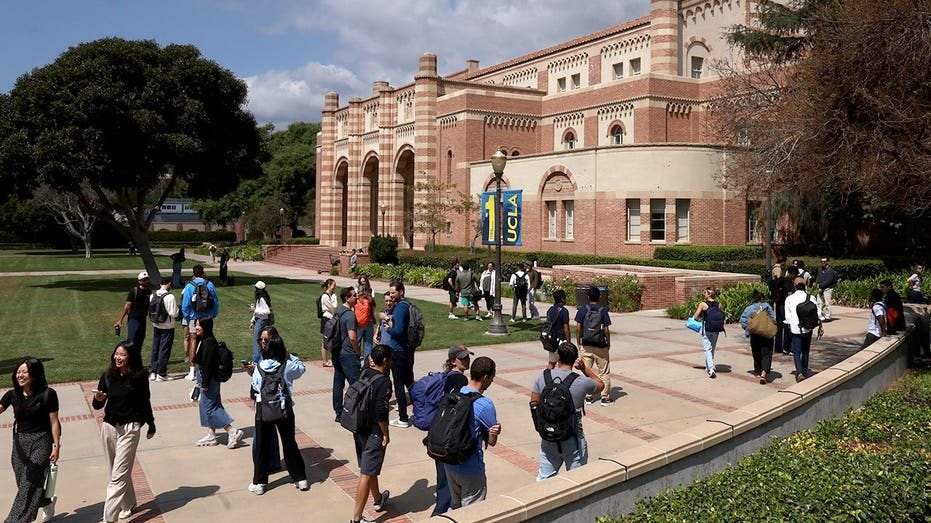
More than six years after the University of California system’s Board of Regents voted to stop considering standardized test scores in undergraduate admissions, The New York Times Editorial Board is calling on the university to reverse course. In an editorial published Monday, the board described the decision as a “terrible” mistake that has left students less prepared for college coursework. The editorial arrives just days before the UC Board of Regents is expected to revisit the policy at its July 14 meeting.
The UC system adopted its test-blind approach in 2020, following a recommendation from the Standardized Testing Task Force (STTF), an 18-member committee of professors from across all 10 campuses. The task force had been convened in 2019 to study how standardized test scores were used in undergraduate admissions. After producing a 225-page report, the STTF concluded that “standardized test scores aid in predicting important aspects of student success, including undergraduate grade point average (UGPA), retention, and completion.” Despite this finding, the Board of Regents voted to eliminate consideration of SAT and ACT scores, even refusing to accept them from students who wished to submit them. The decision was made during the height of the COVID-19 pandemic.
The New York Times editorial board argued that the results of the test-blind policy “have been terrible,” pointing to data from the University of California, San Diego (UCSD). Last fall, nearly 12 percent of first-year UCSD undergraduates were not qualified to take pre-calculus, a low-level math class, up from just 0.5 percent in 2020. The board acknowledged that broader educational challenges—such as artificial intelligence, pandemic-related school closures, and smartphone distractions—have affected student preparedness nationwide. However, it emphasized that the decline at UC was “larger than the regression elsewhere,” underscoring the role of the test-blind policy.
The editorial comes amid growing pressure from UC faculty members to reinstate standardized testing requirements. More than 2,300 STEM faculty members signed a letter urging the university to reverse the policy, warning that “obscuring preparation gaps harms both students individually and the University collectively. It offers the appearance of access while undermining the chance of success.” An additional 900 humanities faculty members signed a similar letter. Despite these pleas, the UC system has not yet reversed the policy. Instead, it has formed a new committee to review the pros and cons of reinstating the tests.
UC Academic Senate Chair Ahmet Palazoglu issued a statement in response to the editorial, saying, “Academic preparedness and student success are significant priorities at the University of California. That’s why the UC faculty Academic Senate is engaged in a comprehensive, data-driven review of how to best assess college readiness and support student success at UC.” He added that the review “will go well beyond previous work on this subject because much has changed across the education landscape since the UC Board of Regents adopted its test-blind undergraduate admissions policy in 2020.”
Notably, Janet Napolitano, who served as UC president in 2020 and backed the test-blind policy, has since expressed support for revisiting the decision. She told The New York Times that the policy was “a worthwhile experiment,” but that the results made it “increasingly clear that the experiment needs to be revisited.” The editorial board noted that the UC system was not alone in dropping test requirements during the pandemic, but many schools have since reinstated them. Institutions now requiring test scores include Harvard, Brown, Georgia Tech, Purdue, Yale, Princeton, Stanford, and the California Institute of Technology, as well as the U.S. Naval Academy and West Point.
Brown University President Christina Paxson has argued that standardized test scores are better predictors of academic performance than high school grades, while acknowledging valid concerns about the tests. The New York Times editorial board concluded by urging the UC Board of Regents to “have the courage to admit they made a mistake six years ago and reverse it.” The regents are scheduled to meet on July 14 to consider the issue.