
News 6 min read By Lauren Baxter
Jury seated in Lindsay Clancy trial as courtroom clash over evidence sets stage for murder case
A jury of 12 women and six men has been seated in Plymouth Superior Court for the trial of Lindsay Clancy, the Massachusetts mother accused of strangling her three young children. Opening statements are set for Monday, and the proceedings are expected to focus on her mental state at the time of the killings.
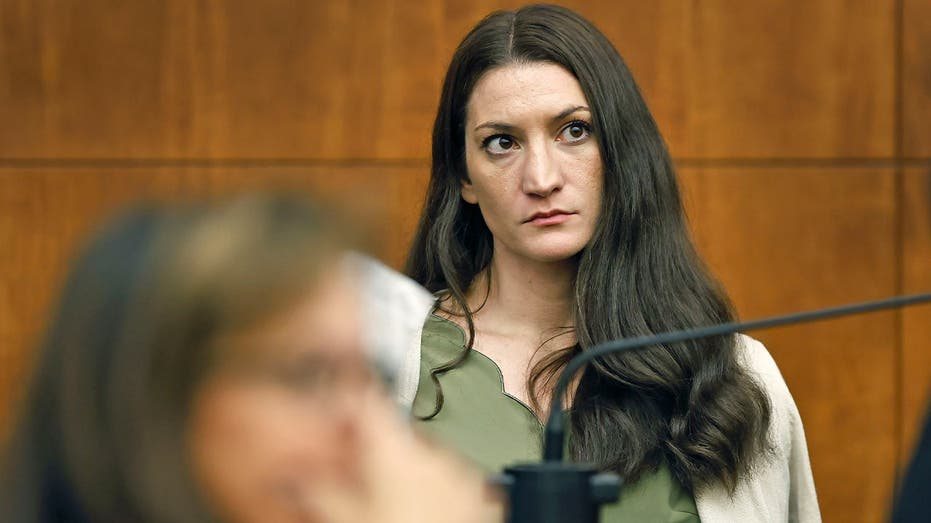
A jury has been seated in the murder trial of Lindsay Clancy, the Massachusetts mother accused of strangling her three young children, as a heated courtroom exchange over the release of a 911 call and crime scene photos set the stage for what is expected to be a closely watched case. The panel of 12 women and six men was finalized Thursday in Plymouth Superior Court, clearing the way for opening statements on Monday. The trial is expected to center not on whether Clancy, 32, caused the deaths of her children — her attorneys have conceded she did — but on whether she was legally responsible for her actions at the time.
Clancy, a former labor and delivery nurse at Mass General Hospital, has pleaded not guilty to three counts each of murder and strangulation in the deaths of Cora, 5, Dawson, 3, and Callan, 8 months. Her defense attorneys plan to argue that she was experiencing severe postpartum psychosis and lacked criminal responsibility. Prosecutors, however, allege the killings were intentional and carefully planned. The legal battle over her mental state is expected to dominate the trial.
The dispute over evidence erupted Thursday after the jury was seated. Patrick Clancy, the children’s father and Lindsay Clancy’s husband, asked the court to limit the media’s ability to record, broadcast, or distribute his initial 911 call, family and crime scene photographs of the children, autopsy images, and the clothing the children were wearing. His attorney, David Meier, argued that allowing such materials to circulate online would cause lasting emotional harm to Patrick Clancy. Lindsay Clancy’s defense attorney, Kevin Reddington, supported the request and accused prosecutors of planning to present the evidence in a manner designed to „inflame“ the jury.
Plymouth Superior Court Judge William Sullivan ruled Friday that the media and public may not record, display, reproduce, or distribute Patrick Clancy’s initial 911 call or autopsy photographs of the children. Reporters may describe what is heard or shown in court but cannot broadcast or publish the recording or images themselves, according to the two-page order. The ruling aims to balance the public’s right to information with the privacy and emotional well-being of the surviving family members.
Authorities said Patrick Clancy left the family’s Duxbury home on Jan. 24, 2023, to pick up takeout food and an item from a pharmacy. While he was gone, prosecutors allege, Lindsay Clancy used exercise bands to strangle the children before jumping from a second-story window in an apparent suicide attempt. The fall left her paralyzed, and she now uses a wheelchair. Cora and Dawson were pronounced dead after being taken to a Plymouth hospital. Callan was flown to Boston Children’s Hospital and died several days later. The medical examiner determined that Cora and Dawson died from asphyxia and that Callan died from complications of asphyxia.
The circumstances surrounding Clancy’s mental condition in the months and weeks before the killings are likely to become the central battleground at trial. Her attorneys say she sought help repeatedly as she struggled with depression, sleeplessness, suicidal thoughts, and voices urging her to harm herself and the children. She was admitted to a psychiatric hospital weeks before the deaths and was prescribed several medications as providers attempted to treat her worsening symptoms. According to lawsuits filed by Lindsay and Patrick Clancy against her medical providers, she heard a voice on the day of the killings telling her it was her „last chance“ to kill the children and herself. The lawsuits accuse her providers of failing to properly diagnose, treat, and monitor a severe postpartum psychiatric condition.
Criminal defense attorney Donna Rotunno, a Fox News contributor, said the defense’s insanity bid faces an uphill battle but noted that Clancy’s documented history of seeking treatment could help her case. „It is usually a hard battle to win,“ Rotunno said. „But given the fact that she has such a documented history of treatment and going to doctors and being diagnosed and seeking out more treatment when she wasn’t doing well, I think she can lay the groundwork for it.“ Rotunno added that Clancy’s prior work as a nurse could cut both ways: prosecutors may argue her medical background made her more capable of understanding her treatment and actions, but the defense could use it to demonstrate the severity of her alleged psychosis. „She was a nurse and still so out of it that she didn’t know she shouldn’t be taking all this stuff,“ Rotunno said. „That, to me, doesn’t play into the intention on this. It’s the total opposite.“
The trial is expected to last several weeks, with testimony from mental health experts, medical providers, and possibly Patrick Clancy, who could be called as a witness for the defense. The case has drawn widespread attention because of the tragic nature of the deaths and the legal questions surrounding postpartum mental illness. Clancy remains held without bail and appeared in court in a wheelchair.