
News 7 min read By Lauren Baxter
House Judiciary Chairman Jim Jordan Issues Criminal Referral Against Former Special Counsel Jack Smith
House Judiciary Committee Chairman Jim Jordan has formally asked the Justice Department to consider prosecuting former special counsel Jack Smith, alleging perjury during congressional testimony.
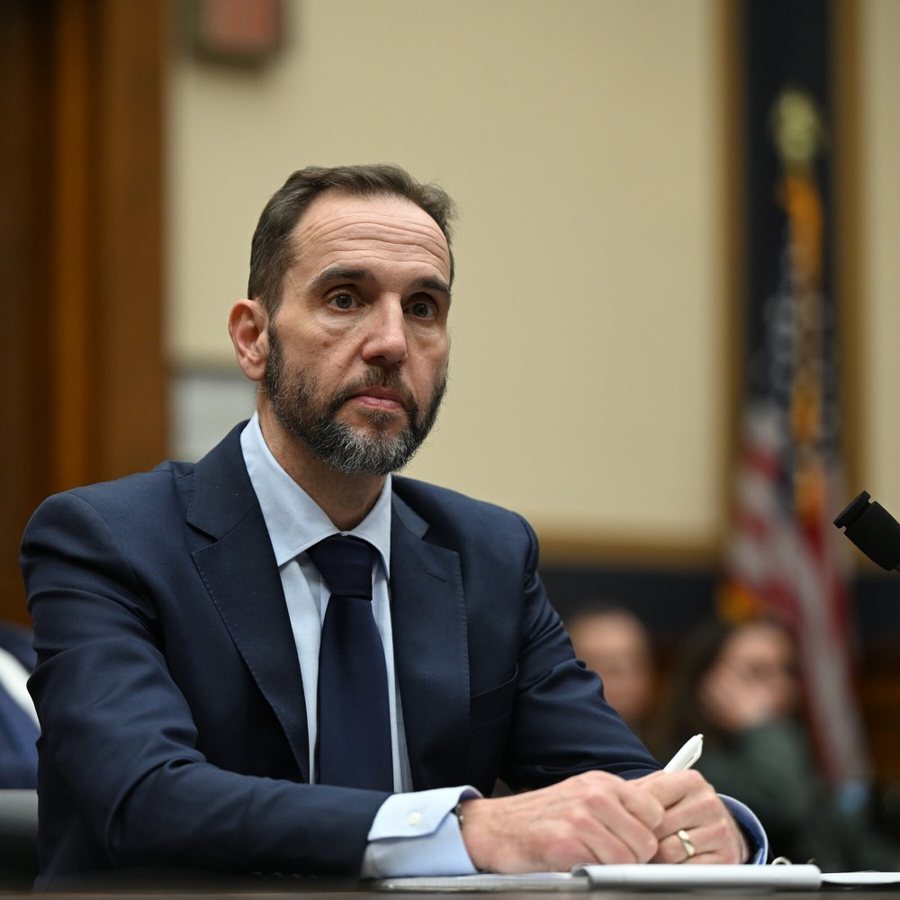
The chairman of the House Judiciary Committee, Representative Jim Jordan, has escalated his confrontation with the Justice Department by issuing a criminal referral against former special counsel Jack Smith. The referral, sent to Attorney General Merrick Garland on Wednesday, accuses Smith of lying under oath during his testimony before the committee earlier this year.
Jordan, an Ohio Republican, alleges that Smith made false statements when he testified about the handling of evidence and the timing of certain investigative steps in the now-closed federal cases against President Donald Trump. The referral asks the Justice Department to open a perjury investigation and, if warranted, to bring criminal charges against the former prosecutor.
The move marks the latest chapter in a long-running feud between House Republicans and Smith, who served as special counsel from 2022 until he resigned earlier this year. Smith oversaw two federal investigations into Trump, including the probe into the handling of classified documents and the inquiry into efforts to overturn the 2020 election results. Both cases were dismissed after Trump won the 2024 presidential election, citing Justice Department policy against prosecuting a sitting president.
During his January appearance before the Judiciary Committee, Smith faced hours of questioning from Republican members who accused him of political bias and misconduct. Democrats on the committee defended Smith, arguing that the hearing was a politically motivated attack on a prosecutor who had acted within the law.
The criminal referral itself does not compel the Justice Department to act. It is a formal request that the department review the allegations and decide whether to pursue charges. Legal experts note that such referrals are rare and often carry more political weight than legal force. The Justice Department has not publicly commented on the referral, and it remains unclear whether Attorney General Garland will order an investigation.
Smith’s attorney, in a statement released Wednesday evening, called the referral «a baseless and politically driven attempt to intimidate prosecutors who did their duty.» The statement added that Smith «testified truthfully and fully» before the committee and that the allegations «have no factual foundation.»
The referral has drawn sharp reactions from both sides of the aisle. House Democratic Leader Hakeem Jeffries described it as «an abuse of congressional power» and «a dangerous escalation of the Republican war on the rule of law.» Meanwhile, several Republican colleagues praised Jordan for holding Smith accountable. Representative Matt Gaetz of Florida said the referral was «long overdue» and that Smith «should face the consequences of his actions.»
The dispute over Smith’s testimony centers on a series of exchanges about the timing of witness interviews and the use of certain grand jury subpoenas. Jordan’s referral alleges that Smith gave contradictory answers when asked whether he had personally authorized specific investigative steps. Committee staff have reviewed transcripts and internal memos, according to Jordan’s office, and concluded that Smith’s statements were inconsistent with documentary evidence.
Smith’s defenders counter that the hearing was designed to trap him into minor inconsistencies and that the referral is a political stunt. They point out that the Justice Department’s own inspector general has not found evidence of misconduct by Smith or his team. The inspector general’s office is currently reviewing a separate complaint about Smith’s conduct, but no findings have been released.
The criminal referral adds to the growing list of tensions between the Republican-led House and the Biden administration’s Justice Department. In recent months, the committee has also issued referrals against several other current and former Justice Department officials, including FBI Director Christopher Wray and Deputy Attorney General Lisa Monaco, over their handling of various investigations. None of those referrals have resulted in charges.
Legal scholars say that perjury cases are difficult to prove, especially when the alleged false statements involve subjective interpretations of events or ambiguous questioning. «A criminal referral from Congress is a serious step, but it is far from an indictment,» said Jonathan Turley, a law professor at George Washington University. «The Justice Department will need to see clear and convincing evidence that Smith knowingly lied under oath. That is a high bar.»
The referral also raises questions about the broader political climate surrounding the Justice Department. Some observers worry that the steady stream of congressional referrals is eroding the independence of federal law enforcement. «When every investigation becomes a political weapon, the public loses trust in the system,» said Norm Eisen, a former White House ethics czar. «This is not how a healthy democracy operates.»
Smith, who served as a federal prosecutor for more than two decades before being appointed special counsel, has largely stayed out of the public eye since leaving office. He has not given any interviews or made any public statements beyond the brief denial issued by his lawyer. His current professional activities are not publicly known.
The Justice Department has not set a timeline for responding to the referral. In similar cases in the past, the department has taken months to review allegations before deciding whether to open an investigation. If the department declines to act, Jordan has indicated that he may pursue other avenues, including a possible contempt of Congress citation against Smith.
The controversy is unlikely to fade quickly. With the 2026 midterm elections approaching, both parties are using the Smith case to rally their bases. Republicans portray Smith as a symbol of a politicized justice system that targeted a former president, while Democrats see the referral as proof that the GOP is willing to undermine the rule of law for partisan gain.
For now, the ball is in Attorney General Garland’s court. His decision — whether to investigate, decline, or simply let the matter languish — will be closely watched by both parties and could shape the political landscape in the months ahead.