Culture 4 min read By Mason Emerson
Spotify Is About to Make Fake Pop Stars Look Fake on Purpose
AI Personas won’t vanish from Spotify, but they’ll get a clear label and lose the algorithmic push that can make a fictional artist feel suddenly ubiquitous.
The weirdest part of the AI-music boom has not always been the music. It has been the moment when a listener realizes that the stylish singer in the profile picture, complete with a name, visual identity and apparent career, is not a person at all. Spotify is now building that reveal into the product instead of leaving fans to discover it later.
Starting in mid-September, artist profiles that represent AI-created fictional performers will receive an “AI Persona” label. More importantly, Spotify will stop putting those profiles into personalized recommendations and editorial selections by default. A virtual star can stay on the platform, but the app will no longer casually introduce it as if it were just another human act.
That does not mean AI Personas are being kicked out of music culture. Fans can still search for them, play their songs and follow their profiles. If a listener actively follows an AI Persona, reports on the rollout say the account can once again influence that person’s recommendations. This is not a new Premium-only feature or a paid subscription gate; it is the ordinary Follow action.
Spotify is also refusing to treat every artist who touches AI as fake. A real musician can use generative tools for lyrics, vocals, instruments or production and still be recognized as a human artist. Spotify’s AI credits beta can flag those specific contributions in song information. The Persona label lives at a different level: it tells you whether the celebrity-style identity itself is synthetic.
That is a much more interesting cultural line than “computer bad, guitar good.” Pop music has always been built with technology, personas, stage names, visual effects and carefully manufactured mythology. The new question is whether there is an actual person inhabiting the persona, or whether the image, face and implied biography are all part of the generated product.
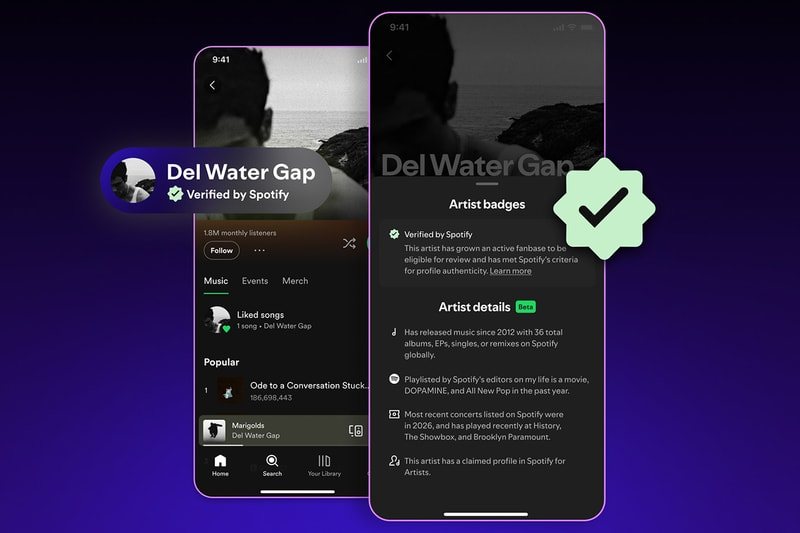
Spotify’s verification system already makes that distinction. Since April, profiles that primarily represent AI-generated or AI-persona acts have not been eligible for the “Verified by Spotify” badge. A real musician who uses AI responsibly can still qualify. In other words, the badge is meant to say something about the person behind the project, not about whether every sound was made without software.
The platform will let creators disclose their virtual status themselves, but it will also investigate popular profiles using human reviewers and AI tools. A “Likely AI Persona” label can be used when the evidence is not fully conclusive, and artists can appeal a decision they believe is wrong.
Spotify has other lines it draws more aggressively. Unauthorized clones of a real artist’s voice can be removed. The company has also been fighting industrial-scale spam, saying in 2025 that it had removed more than 75 million spammy tracks in the prior 12 months.
What changes in September is the celebrity layer. A fictional singer can still have a great song, a fandom and an aesthetic. But the platform will stop lending the full force of its recommendation engine to the illusion before the listener knows what it is.
That could make AI pop stranger in a good way. Instead of pretending to be indistinguishable from ordinary stardom, virtual acts may have to own their synthetic nature and build fans around it. If people still hit Follow after seeing the label, the relationship is at least based on the same thing every pop phenomenon eventually needs: an audience that knows what it is choosing and wants more anyway.
64