Culture 4 min read By Lauren Baxter
Photographer Spends Six Years Portraying 400 American Girls With Their Most Meaningful Objects
A photographer traveled the United States for six years, meeting more than 400 girls and photographing each on film with an object of personal significance, in a project that turns everyday possessions into a portrait of American girlhood.
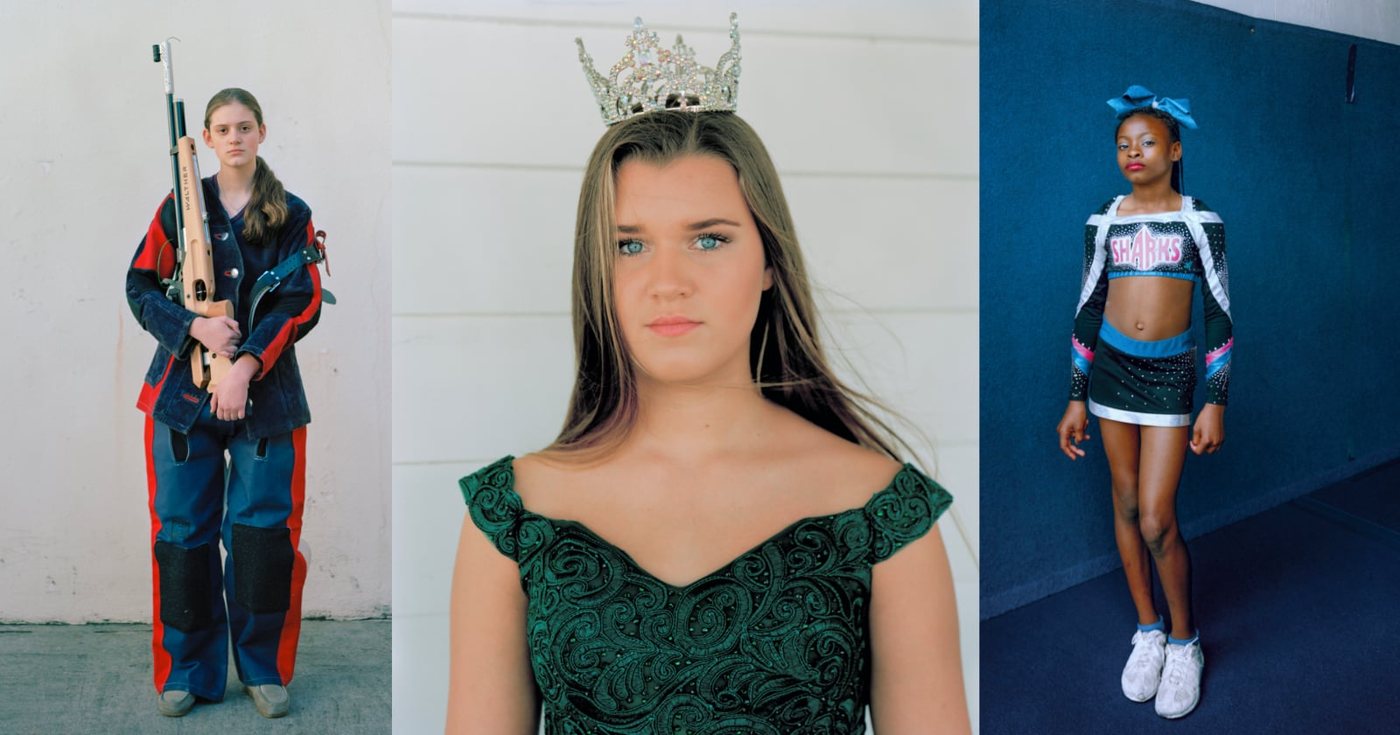
A photographer has completed a six-year project portraying more than 400 girls across the United States, asking each of them to bring an object of personal significance to the shoot and capturing the resulting portraits on film. The undertaking, which unfolded over years of travel and meetings with subjects in different parts of the country, uses a simple premise — a girl and a meaningful possession — as the frame for a much larger portrait of American girlhood.
The project’s scale is central to its character. Four hundred portraits is not a single sitting or a weekend of studio work but a long accumulation of individual encounters, each requiring the photographer to find a subject, arrange a meeting, and learn what object that girl would choose to represent something about herself. The six-year timeline suggests the work was built gradually, with each new portrait adding to a body of images rather than serving as an isolated picture.
The choice to shoot on film gives the series a distinct visual identity. Film imposes its own pace and constraints: fewer frames, careful exposure, and a process that cannot be reviewed instantly on a screen. For a project built around intimacy and personal meaning, that slower method fits the subject matter, lending the portraits a texture and deliberateness that digital photography does not automatically provide.
The objects themselves are the project’s emotional hinge. By inviting each girl to select something of personal significance rather than supplying a prop, the photographer hands a measure of authorship to the subject. The resulting images are portraits of individuals but also records of what young people in the United States consider worth keeping close — a category that can include keepsakes, gifts, everyday items, and objects whose meaning is legible only to the person holding them.
That structure places the work in a documentary tradition of pairing people with their possessions, a format that has long been used to reveal how identity is expressed through what people choose to own and preserve. Here the focus is narrowed to girls, a group whose interior lives and attachments are often described from the outside rather than shown directly. The series lets the subjects speak through their selections, with the photographer’s role being to record rather than interpret.
The geographic reach of the project matters as well. Meeting girls across the United States means the series draws on a wide range of backgrounds, communities, and circumstances, even though the shared format — one girl, one object, one film portrait — keeps the images comparable. That consistency is what allows a collection of individual pictures to function as a broader cultural record.
Six years is a long time in the life of a young subject, and the project’s duration raises questions about how the portraits will read as a group. Girls photographed early in the process have since grown older, and the objects they chose belong to particular moments in their lives. The series therefore captures not only who these girls were when photographed but also a span of years in which American childhood and adolescence were shaped by changing habits, technologies, and family circumstances.
The completed body of work now stands as a substantial archive of American girlhood assembled one portrait at a time. Its method is deliberately modest — no elaborate sets, no staged narratives, just a subject, a possession, and a camera loaded with film — but the accumulation of more than 400 such encounters gives the project its weight as a cultural document.
8