Culture 4 min read By Morgan Griffin
Laurie Anderson Shares Three Rules for Life in Brooklyn Performance Art Procession
Laurie Anderson combined electronic performance art with life advice during the Return of the Buffalo: Tatanka Owe Akupi procession in Downtown Brooklyn on September 19, and a clip of the moment has since spread online.
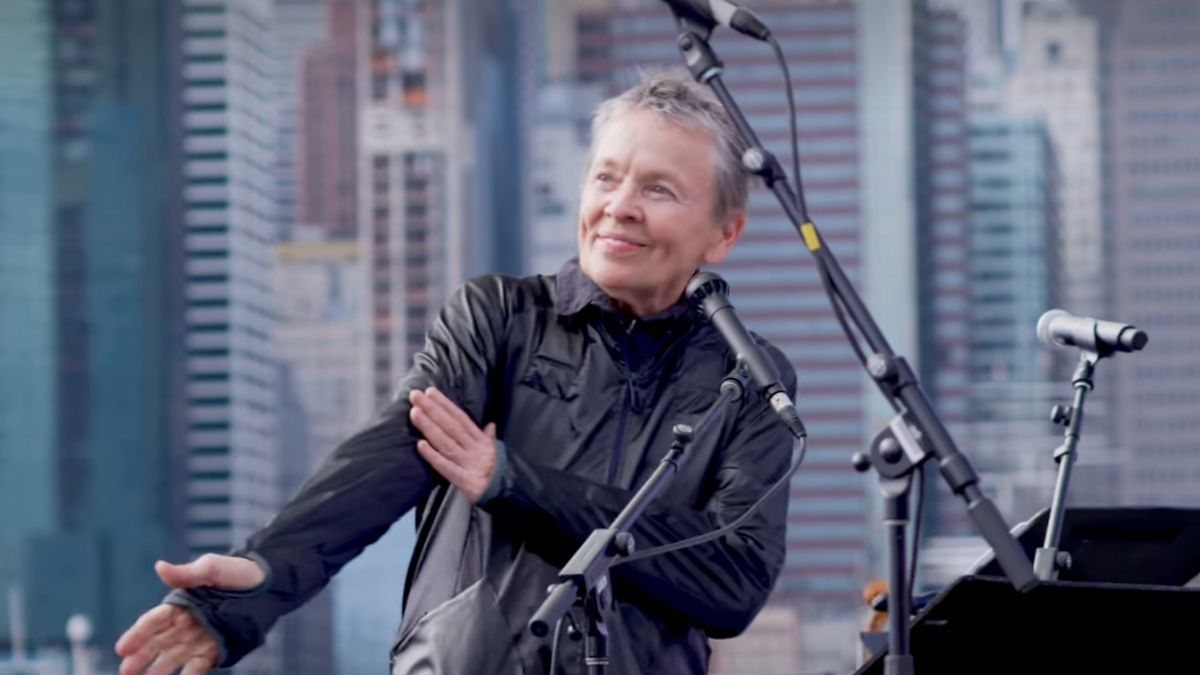
Laurie Anderson turned a Downtown Brooklyn procession into a meditation on how to live, delivering a striking blend of electronic performance art and plainspoken life advice during Return of the Buffalo: Tatanka Owe Akupi earlier this month. A clip of the moment has since begun circulating online, drawing fresh attention to the September 19 event.
During the procession, Anderson revisited three rules for life, offering them as part of a work that mixed her signature electronic sound with a public, moving format. The piece placed her among the crowds of Downtown Brooklyn rather than on a traditional stage, turning the street itself into the venue for the performance.
The event, titled Return of the Buffalo: Tatanka Owe Akupi, brought together performance, procession, and public space. Anderson's contribution fit that framework, using the walk through the neighborhood as a setting for both artistic experimentation and direct address to those present. The clip now making the rounds captures the moment she shared the three rules, which have resonated with viewers beyond the original audience.
Anderson has long been known for work that crosses boundaries between music, storytelling, visual art, and technology. Her performances often pair electronic instrumentation with spoken reflection, and the Brooklyn piece continued that practice by folding life guidance into an art event. The setting — a procession through city streets — gave the advice a communal, unpolished quality that a concert hall might not have provided.
The Return of the Buffalo: Tatanka Owe Akupi event took place on September 19 in Downtown Brooklyn. Its title references the buffalo, or tatanka, a figure with deep significance in Native American cultures, and the gathering was structured as a procession rather than a seated show. Anderson's segment became one of the moments that participants and later online viewers singled out.
Because the clip has spread online, the three rules have reached an audience far larger than the one that lined the Brooklyn route. That afterlife is familiar for Anderson, whose career has repeatedly produced moments that move from live performance into wider cultural circulation. The rules themselves are simple enough to travel: they are framed as guidance rather than doctrine, offered in the middle of an art event rather than from a podium.
The performance also reflects a broader trend in contemporary art and entertainment, where public spaces, walking formats, and participatory events increasingly host work that might once have been confined to galleries or theaters. Anderson's presence in a Brooklyn procession places her within that shift, using the city as both backdrop and collaborator.
For now, the clip continues to circulate, carrying the three rules to viewers who were not in Brooklyn on September 19. The piece stands as another example of Anderson's ability to combine the conceptual and the direct, turning a public walk into a brief, memorable lesson on how to live.
19