Culture 5 min read By Morgan Griffin
Chuwi channel Bad Bunny spotlight into debut album
Puerto Rican quartet Chuwi went from local gigs to opening Bad Bunny's world tour before releasing their debut album. Now they are channeling that momentum into their first full-length project, rooted in Caribbean sounds and their Isabela origins.
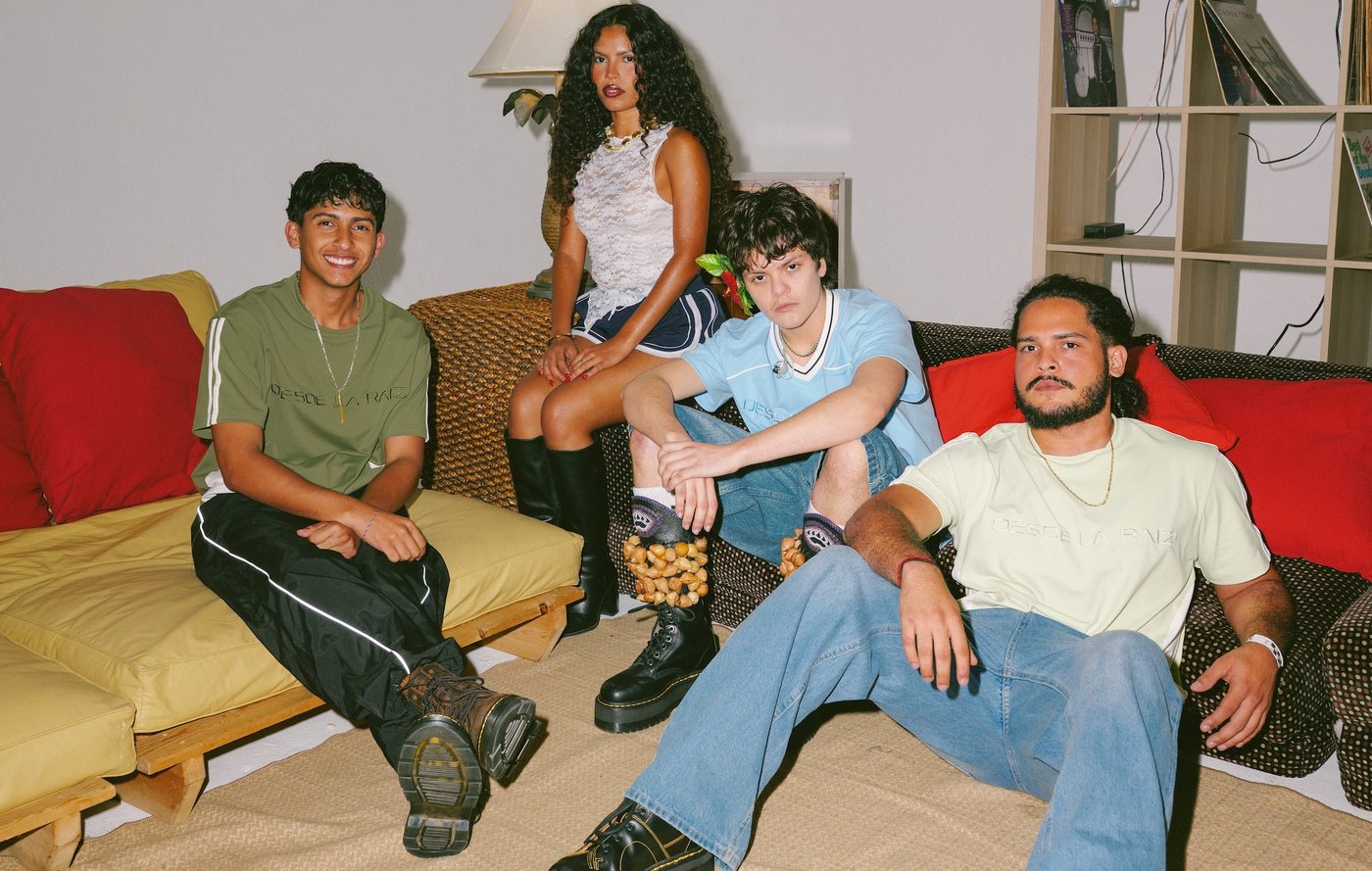
Puerto Rican quartet Chuwi have spent the past year living a scenario most emerging acts could barely imagine: performing in stadiums across Latin America, Australia and Europe as the sole opening act for Bad Bunny, all before releasing their debut studio album. The run ended with a euphoric two-day finale at Puerto Rico's Hiram Bithorn Stadium, closing a chapter that began with a single phone call in 2024.
That call brought an offer to feature on Bad Bunny's monumental album «Debí Tirar Más Fotos», specifically the track «Weltita». For a band still finding its footing in the local scene, the news landed like a shockwave. «It's hard to explain how it all felt», says Willy Aldarondo Torres, who forms the group with siblings Lorén and Wester, plus Wester's school friend Adrián López Soto. «We were just starting in the local scene in Puerto Rico, and suddenly something like this got dropped onto you. We obviously had to put the initial shock to the side and focus on the song, but after, it's like, 'What on earth is going to happen now?'»
The answer arrived quickly. After the album's release, Chuwi joined Bad Bunny on a world tour that stretched nearly a year. The experience of carrying a piece of Puerto Rico to global audiences and then bringing fragments of each destination back home proved transformative. López Soto points to a recurring moment in their shows: during «Tierra», he raises the Puerto Rican resistance flag alongside the flag of whichever country they are performing in. «Having the Puerto Rican flag and the resistance flag together, and everyone deeply understanding both of them, was unforgettable», he says.
Chuwi's origins trace back to the municipality of Isabela in northwestern Puerto Rico, where Willy, Lorén and Wester started the project as an experimental outlet during the COVID-19 pandemic. The trio recorded most of their early work in their parents' bedroom, which served as their de facto studio until recently. López Soto, a native of Mayagüez, joined as percussionist in late 2021 after the band received their first invitation to play live.
Music ran through the Aldarondo Torres household from the start. Their father introduced Willy to production, recreating Jesús Adrián Romero songs from scratch for the church the family attended. Their mother supplied the eclectic soundtrack, playing everything from Latin and Caribbean music to American pop during school runs. For López Soto, the pull was instinctive: he turned household pots upside down to build makeshift drum sets, prompting his mother to enroll him in music lessons from fourth grade through graduation.
Those varied influences converge in Chuwi's sound, which blends Caribbean rhythms and Puerto Rican staples — from Juan Luis Guerra and Silvio Rodríguez to Ricky Martin and Marc Anthony — with an indie modern vein and the storytelling of '80s Spanish pop act Mecano. Wester also cites the Black Eyed Peas, Skrillex, Empire of the Sun and Foster the People as inspirations. «It was all that mix throughout different phases of our lives that united to create us», he explains.
The band's name itself carries a piece of their history. Before uploading their first song, «Somnia», they realized they needed a group name. Spotting the family dog Chewie lying in their parents' bedroom, Wester recalls thinking, «Fuck it, Chuwi». They adjusted the spelling from the Chewbacca nod to something «more Hispanic-sounding». The dog, brought home years ago by their sister Álani, remains part of the family and has become embedded in the band's identity.
Chuwi's early hazy R&B experiments eventually gave way to a firmer footing in Latin sounds, solidified through the EPs «Pan» (2022) and «Tierra» (2024). Those releases helped them break into Puerto Rico's local circuit, though Wester still describes the group as transitioning from home experimentation to a fully realized live act. The past year on the road with Bad Bunny accelerated that shift, alongside their own concerts and small tours.
All those reflections are now feeding into their upcoming debut album, expected later this year. Willy teases a project rooted in Caribbean music while incorporating «foreign» sounds gathered from their travels. The goal, he says, extends beyond their own success. «I hope to empower the next generation to keep making music from our home.»
51